Shade Blog

Keep up-to-date with the latest goings on in the shade industry through the 1800 SHADE U Shade Blog.

National Schools Solar Program Back On

20 July 2010

After a period of hiatus, the National Schools Solar Program is once again offering grants for awnings and shade structures to Australian schools but applications have a cut off of 20-August so be quick !

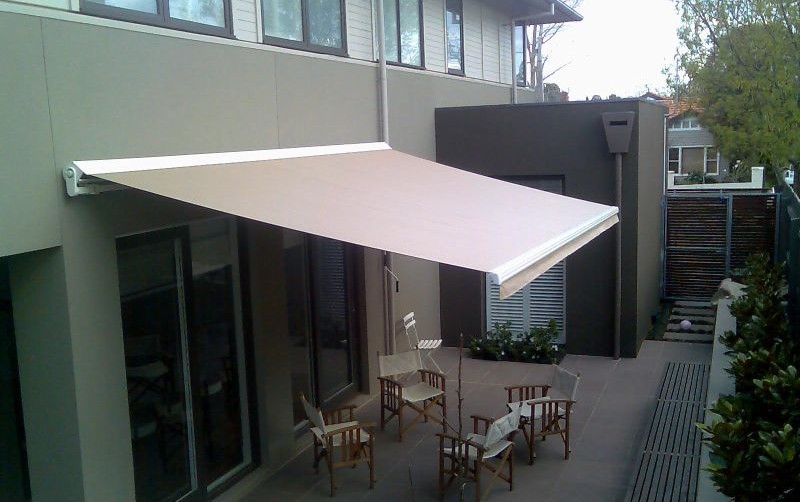
Shade Awnings help save energy.

That's why the Australian Federal government has included shade awnings in the National Solar Schools Program Grant aimed at tackling climate change.

Eligible schools can get funding for retractable shade awnings.

1800ShadeU supplies retractable shade awnings including folding arm awnings and a range of other similar solutions which may qualify as they also help your school save energy and also provide sun-smart UV protection for the children at the same time.  A fantastic opportunity!

We can quote for design and installation and provide pointers for your grant applications.  Contact us today to find out more.

Comments (0)

Financing Shade Structures for the Home

19 July 2010

Want to build a shade structure such as an awning but don't have the cash ?  It is reassuring to know that there are ways to finance your home improvements.

There is always the option of a personal loan or mortgage extension.

A little known fact that some banks include Shade Structures with other similar "Green" home improvements in their discounted environmental loan programs.

While a handful of retail banks and building societies have such loans, only a couple will include shade structures such as awnings that help save on energy and cooling costs.

At the time of writing, banks offering a discounted rate for loans that stated they do include such structures are:

So get ready for summer and take advantage of these great green loans to improve your home.

Comments (0)

Four Sided Sails are Superior to Triangles

07 July 2010

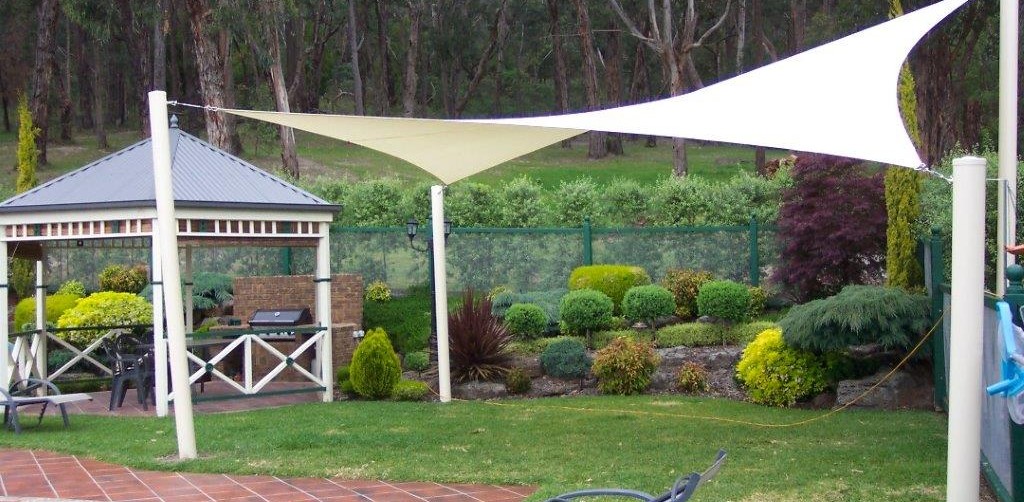
A number of customers walk through the our factory door and enquire about a triangular shaped Shade Sail but the triangle is not the ideal shape for most applications.  Only on the rare occasion is the triangle shape necessitated by a small courtyard or some other triangular shaped area. It seems that most people's idea of Shade Sails comes from depictions of them as triangles (our own logo features triangular shapes) but in most case what they have actually seen is t whereas it is in fact the illusion that a Hyperbolic Shade Sail creates.

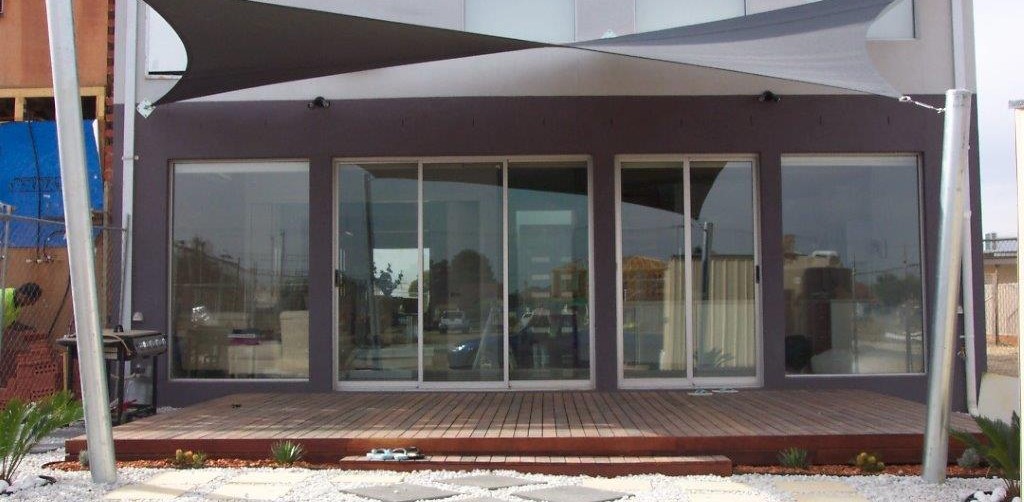
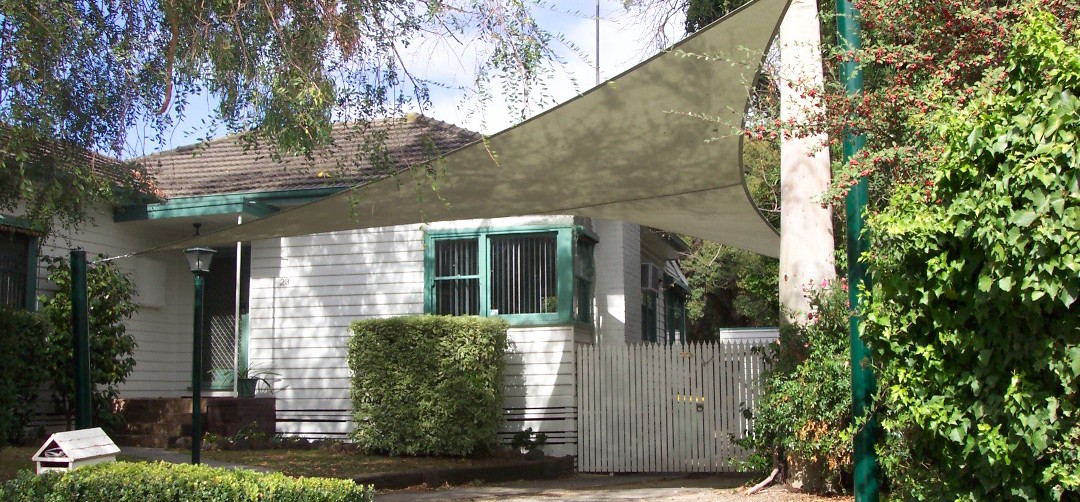
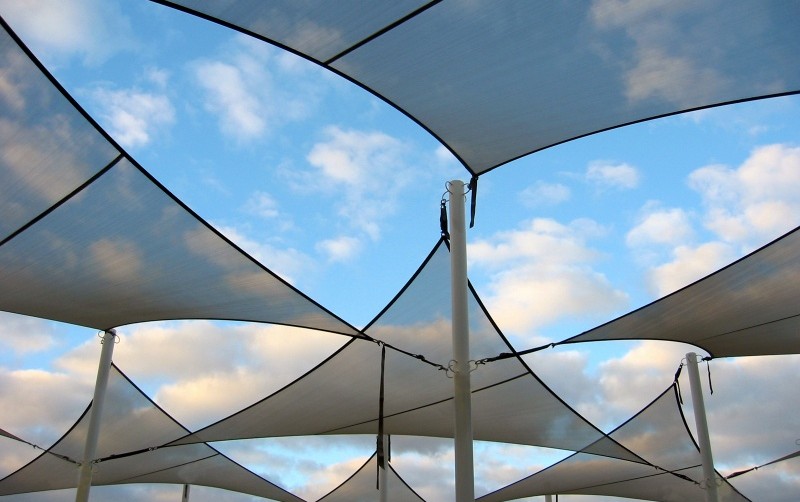
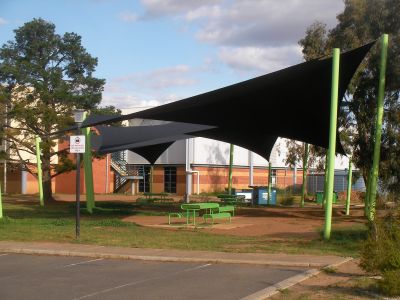
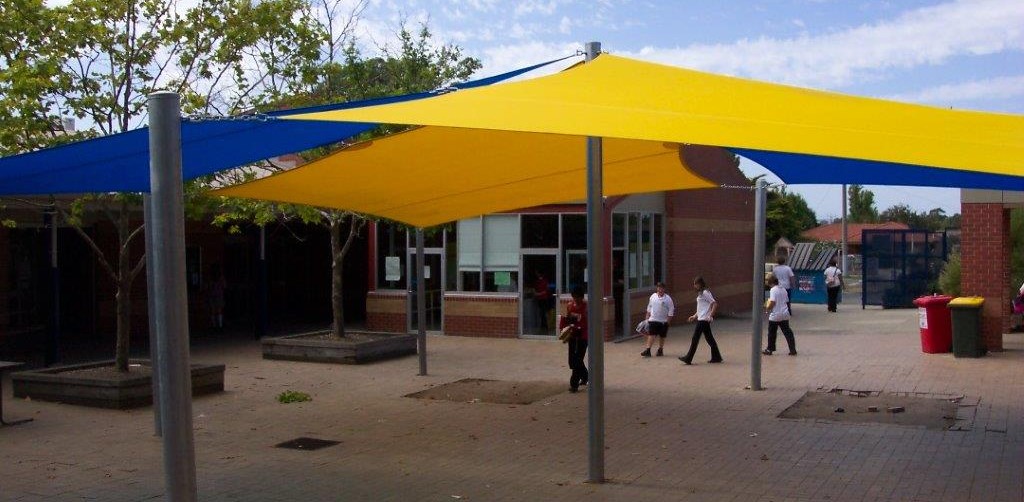
A Hyperbolic Sail is a four sided, four post ShadeSail with two diagonal posts placed high and two diagonal posts placed low. This shape is optimal as it creates an even wind load above and below the Sail but when seen from a distance one post can appear to disappear over the horizon of the Sail and give the appearance of a triangle.

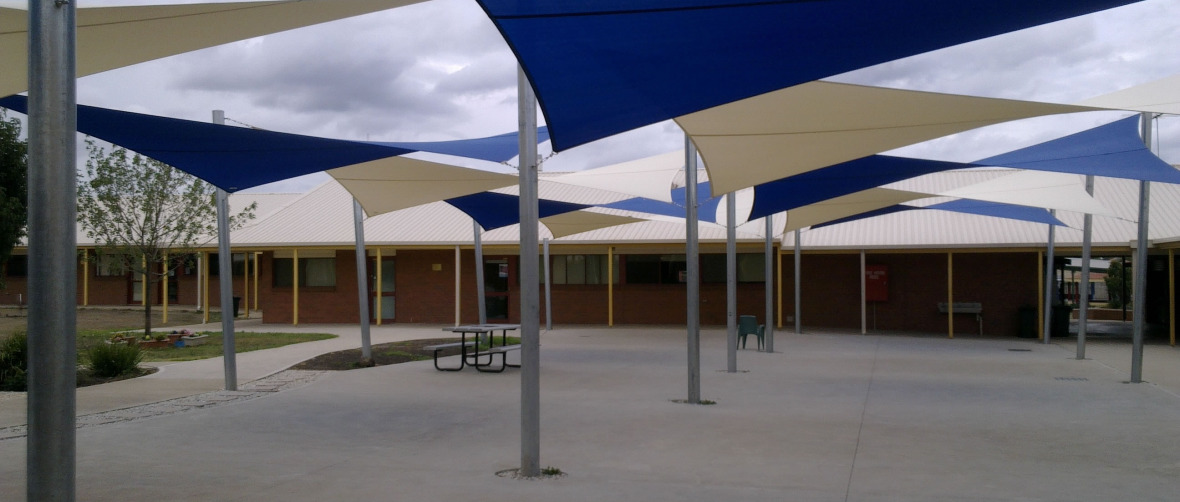
Our company sells ShadeSails to the public but we also wholesale to the the ShadeSail industry and we find that we make very few triangular Sails if any.  This is especially the case for custom Shade Sail projects.  By the time you cut the catenary curves in to the Sails perimeter (which are needed to keep the Sail tight) you don’t finish up with enough coverage to meet the requirements of the job. The depth of the catenary curve is based on a percentage of the distance between the Shade Sail posts so this is especially bad when the triangle is much longer than it is wide. When a ShadeSail is being designed the ShadeSail designer needs to take in to account the direction and height of the sun, which normally means look out fot the northern sun lower in the sky later in the summer and of course the low western sun in the afternoon.With a larger area that can be covered by a four sided ShadeSail it is easier to provide protection from the sun as the Sail shades a wider area.  So while triangular pre-made sails are popular with do it yourself enthusiasts, we will rarely if ever recommend them for projects.

Four sided shade sails are much more effective and this is why we don’t usually recommend triangular Sails 

Comments (0)

Shade Sails a Future Renewable Energy Source ?

05 July 2010

In recent years New Scientist has highlighted the emerging field of Solar Cell Fabrics, a fabric with embedded photovoltaic (PV) cells which generate electricity when exposed to light.

Shade Sails already provide significant environmental and energy saving benefits, however such technology would merge the rapidly growing solar energy industry with the Shade Sail industry and provide a new source of renewable energy for the home.  The technology is currently going through commercial testing with concept tents and temporary shelters already available.  A company called ShadePlex is apparently developing a product that integrates thin film photovoltaic modules with architectural fabrics and others are also developing similarly exciting products. 

It would certainly be a stretch to imagine tensioned shade sails with power cords running inside the posts - but anything is possible !

Comments (0)

Advantages of Cantilever Shade

15 June 2010

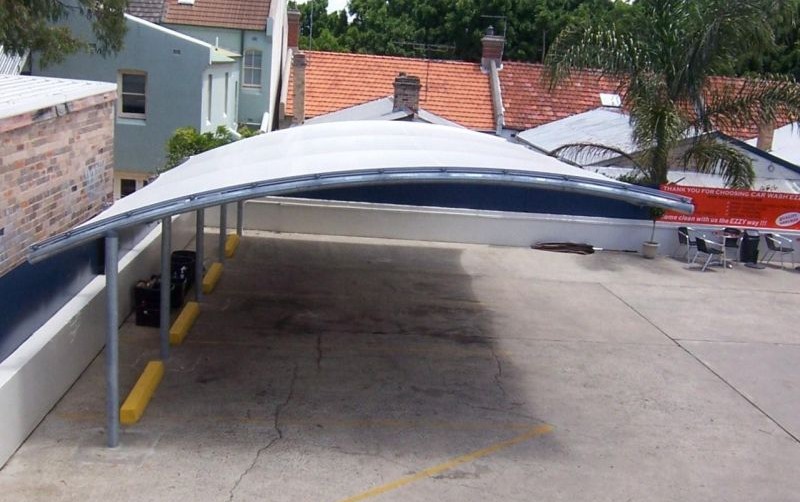
The greatest advantage of a cantilever structure is the fact that it only requires support posts on one side of the structure where a conventional ShadeSail requires posts on both sides.eg A square or rectangle require at least 4 posts or posts on one side and another type of structure on the other such as a building.(if structurally suitable.)

The loads of the cantilever are contained within it’s own frame so unlike a ShadeSail there isn’t tension between the posts or posts and another structure. The cantilever is freestanding and doe’s not rely on the structural integrity of any other structure. If you need a waterproof or shaded area without a gap between between the building and the cantilever, the cantilever is simply designed with rafters that are long enough to stretch over the roof eliminating the gap. When designing a ShadeSail you should always create a hyperbolic shape which will equalize the pressure above and below the sail cloth and reduce the loads on the entire structure. This has it’s advantages but the disadvantage is that you need to raise certain parts of the Sail which will allow some sun under the sail at different times of the day or times of the year. The cantilever is engineered for the wind loads or fabric covering and the curved rafters of the structure allow for water run off.

The greatest advantage of a cantilever is where a view must not be obstructed or where the extra posts of the ShadeSail would make access for a vehicle or other difficult such as in a driveway or carpark. Cantilevers can be designed side by side or back to back.   

Comments (0)

Pergola vs Shade Sail

17 May 2010

Both pergolas and Shade Sails are open side structures used for shading or screening, traditionally in domestic garden settings or as outdoor entertainment areas

Pergolas are typically constructed of timber frames.  Technically a pergola with a waterproof roof is considered a patio or a gazebo.

Shade Sails have several definite advantages over pergolas:

  • can be erected more quickly
  • can be more cost effective
  • are not affected by termites, wood pests and rot
  • slicker more modern look
  • more flexible design options, for example they can be built around objects such as pools

Fabric Architecture is a spectacular cost effective alternative to a standard solid roof Patio or Pergola. Shade Sails can be designed from roof masts to posts to create the modern look of Hyperbolic Sails. Another outstanding design for Pergola/Patio areas is the outstanding modern look of the Cantilever. The benefit of the cantilever is that it is a fully free standing structure and does not rely on the integrity of the building. Cantilevers can stretch to whatever length is required and can also be made in waterproof architectural grade PVC. The attractive look of custom made Shade Sails or Cantilevers can really improve the look of an area and add value to a property.

Comments (0)

Architec 400 Shade Structures

18 March 2010

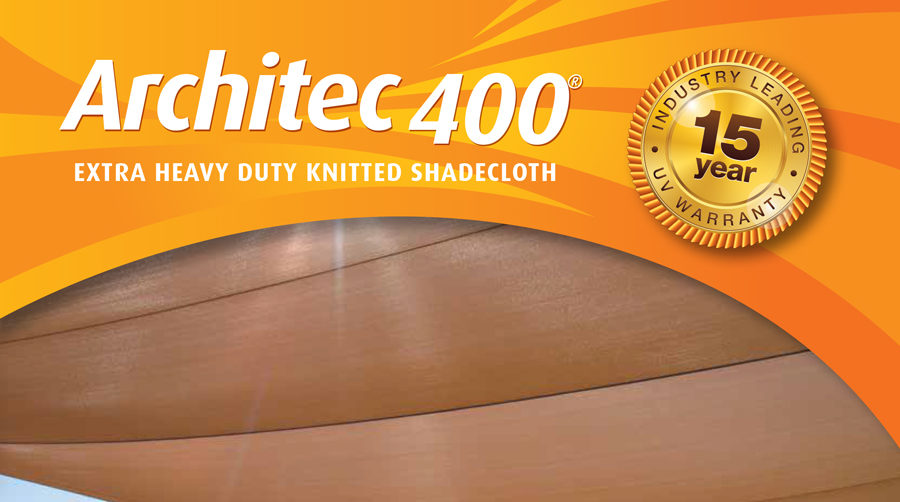
Architect 400 is one of the new materials which 1800ShadeU uses in the designs and installation of very large commercial tension membrane structures and shade sails.

Architec 400 is a 400 gsm High Density Polyehtlyene (HDPE) knitted shadecloth fabric available in a range of colours including sandstone, porcelain, aquamarine, navy blue, slate grey and midnight green. 

Popular with architects, Architec 400 is tear resistant, excellent under tension and is a long life material.

Comments (0)

Shade Sail Grants 2010

02 December 2009

Here are several Shade Sail grants and funding opportunities in 2010 that we know of which available to Australian schools and non-profit organisations (valid at the time of writing).  Additionally many local councils offer community grants.

1800SHADEU can point you in the right direction for your grant applications in the interests of your organisation choosing us for supply and installation.

These include:

If you know of any other available grants, please let our readers know by using the comment form below.


Update (July 2010): The National Schools Solar Program is back on, offering grants for awnings and other similar structures.

Comments (0)

Melbourne heat wave survival tips

22 October 2009

Summer is almost upon us and some are saying it could be the hottest yet, causing more deadly heat waves and bushfires.  Melbourne is one of the hottest cities in Australia during summer.  So here are some tips about surviving another Melbourne heat wave.

In recent years we've seen power outages in Melbourne which render air conditioning useless when it is needed most.  Air conditioning can not always be relied on to provide respite from heat wave conditions.

The World Heatlh Organisation in Europe highlights the harmful health effects of heatwaves which cause many thousands of deaths around the world each year.  The effects include heat cramps, heat exhaustion, heat stroke (or Sun Stroke) with symptoms including fainting, nausea, weak pulse, vomiting, dizziness, exhaustion, confusion, dry skin, heavy sweating, painful spasms, blood pressure, hyperventilation, loss of consciousness and even death.  The organisation in fact lists shade up there with hydration as one of the most important things to survive the heat.

With the summer heat waves so close, it is time to start planning ways you can reduce the impact on your health, as well as the health of your family, friends, workers and colleagues.

Seniors as well as people with medical conditions are at highest risk of fatality during a heat wave.  While heat disorders effect school children, sportspeople, people working in heat related industries, construction workers and pregnant women people most.

Custom built Shade Sails, awnings and umbrellas are one of the best ways to block the sun and UV radiation outdoors during heat waves.  Also unlike tin roofs, tensile structures are typically resistant to changing heat conditions.  To get the most out of Shade Sails, you need a customised shade solution that takes into account position and sun to provide maximum resistance to heat wave conditions.

So help the people you care most about to survive the next Melbourne heat wave by having a Shade Sail or Shade Structure put where you need it most.

 
Comments (0)

PTFE Architecture

18 October 2009

PTFE architecture is fast becoming popular and PTFE is increasingly used for large membrane structures and engineering projects.

PTFE or Polytetrafluoroethylene is the stuff which commonly lines frying pans to give it the non-stick effect known as Teflon.  The fabric is a fibreglass membrane which has a higher durability and longer life than standard shade fabric, making it ideal for large architecture tensile and membrane structures.  PTFE material is also favoured due to its low maintenance, fire resistant properties, light reflection (and UV blocking ability) and its translucency (which is higher than PVC).  Like PVC, PTFE often has a glossy plastic look.  PTFE is available in waterproof and breathable variations.

The Gabba stadium in Brisbane's Shade Sail like roof is such a structure.

Apart from stadiums is also being used in preference to PVC for some high end umbrella like structures.

Comments (0)

Archive

Categories

Subscribe

Bookmark and Share